Why resin printer ventilation deserves a real setup
A resin printer can make incredibly detailed miniatures, props, and prototypes, but the printer is only half of the workstation. Liquid photopolymer resin, uncured prints, and 99% IPA washing all create smells and exposure risks that are much easier to manage when the entire workflow happens inside a small, actively exhausted enclosure. For a garage or spare-room setup, the strongest value is usually not a desktop air purifier. It is a grow-tent-style resin printer ventilation setup with a 4-inch inline fan, ducting to the outside, and a sensible spill-safe layout.
The goal is simple: keep fumes and odors contained at the source, pull air away from your breathing zone, and avoid turning the whole room into the filter. This matters even more if the printer sits far from a door or window, because a long duct run needs enough fan pressure to keep air moving.
The setup I would build first in 2026
For most compact MSLA printers, including the Elegoo Mars 5 Ultra, I would start with a horizontal grow tent large enough to hold the printer, a wash-and-cure station, a silicone work mat, and a small drying tray. A 24 x 24 x 36 inch tent can work for a single printer, but a wider tent is easier to live with if you want the wash station inside the same negative-pressure space. If you have the room, a 24 x 48 inch tent is the safer long-term buy because it gives you space to open lids, remove the build plate, and keep IPA bottles away from the fan path.
The fan choice is where I would not go too cheap. A quiet 4-inch inline fan such as the AC Infinity CLOUDLINE T4 or CLOUDLINE PRO T4 is a good fit because it gives adjustable speed, enough airflow for a small enclosure, and a cleaner installation than a random booster fan. Pair it with 4-inch flexible ducting, metal hose clamps, a window or door vent adapter, and, if the exhaust could bother neighbors, a 4-inch activated carbon filter on the exhaust side.
- Core pick: AC Infinity CLOUDLINE T4 or CLOUDLINE PRO T4 4-inch inline fan
- Enclosure: 24 x 48 inch grow tent if using printer plus wash/cure station
- Ducting: 4-inch flexible duct, kept as short and straight as practical
- Odor control: 4-inch activated carbon filter, especially when exhausting near people
- Workbench safety: silicone mat, lipped tray, nitrile gloves, eye protection, and an organic-vapor respirator
Why the Elegoo Mars 5 Ultra works well in this kind of enclosure
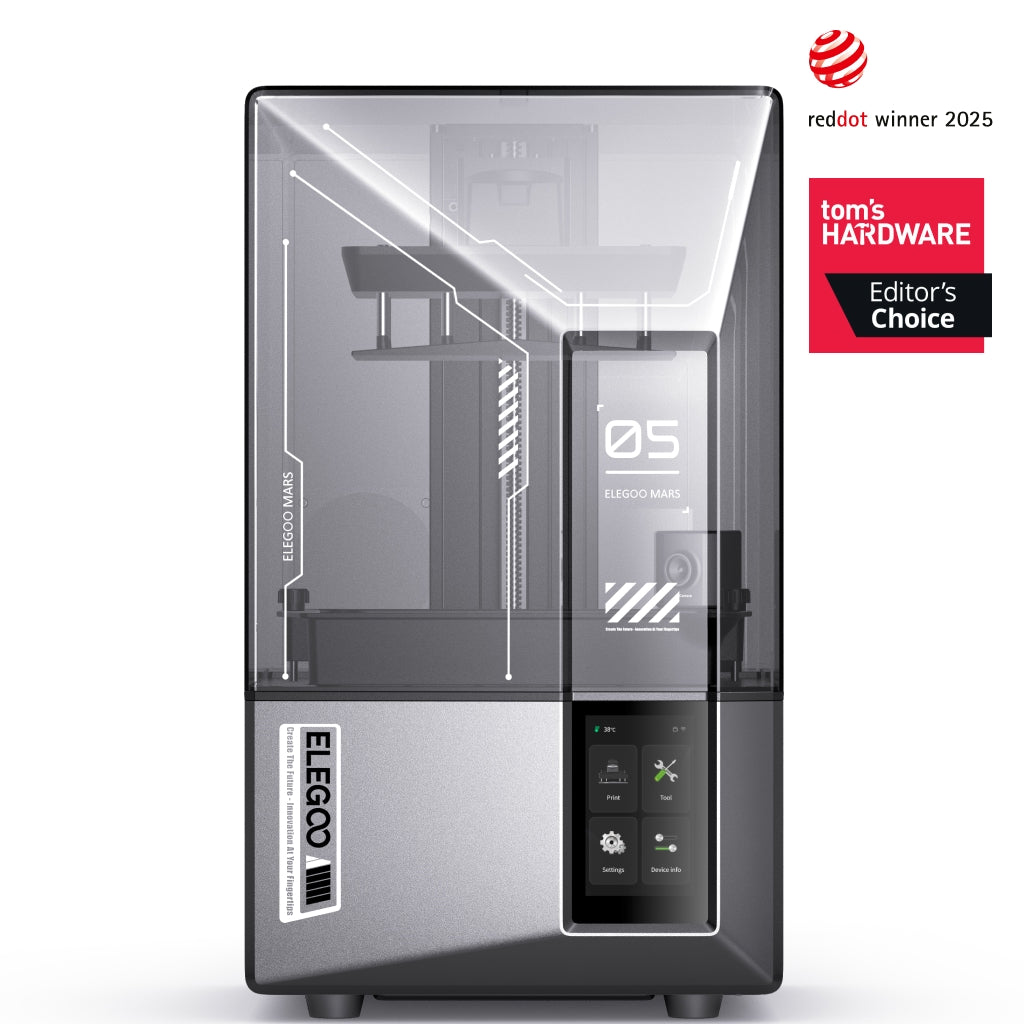
The Mars 5 Ultra is a strong beginner resin printer because it is compact but not toy-like. Elegoo lists a 153.36 x 77.76 x 165 mm build volume, a 7-inch 9K mono LCD, 18-micron XY resolution, Wi-Fi/USB connectivity, automatic leveling, smart mechanical sensors, and AI camera monitoring. The printer itself measures 260 x 268 x 451.5 mm, so it fits comfortably in a medium grow tent with enough side clearance for resin handling.
Its tilt-release system is also useful for new users because Elegoo rates the printer up to 150 mm/h, and the tilting vat is designed to reduce peel forces during printing. That does not remove the need for ventilation. It simply means the printer is fast and convenient enough that you may use it more often, which makes a repeatable safety setup even more important.
Should the wash-and-cure station go inside the tent?
If space allows, yes, but with one important caveat: keep the IPA container closed whenever you are not actively washing parts. The wash stage is often smellier and messier than printing because uncured resin is being diluted, parts are dripping, and alcohol evaporates quickly. Putting the wash station inside the enclosure keeps that workflow under the same exhaust path, but it also means you need a stable surface, good lighting, and enough room to move without knocking over resin or IPA.
The Elegoo Mercury Plus V3.0 is a common match for Mars-size printers. It is compact enough for a tent setup and handles both washing and curing, which is convenient when you do not want separate machines crowding the bench. If you plan to print larger figures later, consider whether a bigger wash/cure station will fit before buying the smallest tent that technically holds today’s printer.
How to route the duct without killing airflow
A 15 to 20 foot duct run can work, but every bend reduces airflow. Keep the duct as straight as possible, avoid crushing it behind shelves, and place the fan so it pulls air from the tent and pushes it toward the exhaust point. The tent should be slightly open on the opposite side or use a passive intake vent so the fan has replacement air to pull. If the tent sides suck inward a little, that is usually a good sign: the enclosure is under negative pressure and fumes are less likely to leak into the room.
For a garage door exit, a temporary panel or window-style adapter is cleaner than just tossing the hose under the door. In warm climates, also add a bug screen or sealed filter so insects do not treat the duct as an invitation. If you are using a carbon filter, remember it is a consumable. Replace or refill it when odor control drops off.
What not to rely on
Small USB carbon filters inside a printer cover are better than nothing, but they are not a full ventilation strategy. The same goes for a general room air purifier sitting across the garage. Those devices may reduce odor after fumes have already escaped, but they do not capture the source as effectively as an enclosure with active exhaust.
Also be careful with heat. Resin prints better within the manufacturer’s recommended temperature range, but do not place questionable heaters near open IPA or flammable vapors. If the garage is extremely hot, focus first on shade, stable bench placement, and ventilation that exhausts outside rather than recirculating hot, contaminated air around the workspace.
Bottom line
The best resin printer ventilation setup for a home garage is a wide enclosure, a reliable 4-inch inline fan, short ducting to the outside, and a workflow that keeps printing, washing, drying, and curing under control. For a Mars 5 Ultra and Mercury-style wash station, I would choose a 24 x 48 inch tent over a tiny hood because the extra space reduces spills and makes the setup easier to use every week. Add PPE and a closed IPA routine, and you end up with a safer, cleaner resin station that still feels practical for a hobbyist budget.