Why portable AC buyers should care about the hose design
A portable air conditioner can save a hot bedroom or small living room when a window unit is not allowed, but the wrong one can feel like an expensive fan. The main keyword to understand is dual hose portable air conditioner: a dual-hose or hose-in-hose design pulls outdoor air across the condenser and sends hot air back outside, instead of constantly stealing cooled room air and creating negative pressure.
That does not mean every single-hose model is bad. It does mean cooling capacity, real SACC/DOE BTU ratings, noise, and the window kit matter more than the giant ASHRAE BTU number printed on the box. For most bedrooms, a quieter inverter model with a good seal beats a cheaper 14,000 BTU unit that runs loudly and leaks hot air around the panel.
How we narrowed the picks
We prioritized portable air conditioners that make sense for renters and homeowners who cannot install a window AC: real-world cooling power, dual-hose efficiency where available, noise control, setup practicality, replacement-filter access, and broad retailer availability. Manufacturer specs and current retailer listings were checked for SACC/DOE ratings, room-size claims, heat-pump features, and price ranges, then balanced against long-term owner pain points such as awkward hoses, heavy cabinets, and draining in humid weather.
The portable AC units worth shortlisting in 2026
1. Midea Duo MAP14HS1TBL — the most sensible dual-hose pick for bedrooms
The Midea Duo is the first model I would check if you want a strong portable AC that does not sound like a shop vacuum. The MAP14HS1TBL is listed as a 14,000 BTU ASHRAE / 12,000 BTU DOE portable air conditioner with heat, and Midea rates it for spaces up to about 550 square feet. Its hose-in-hose design gives you the efficiency advantage of dual hose without managing two separate ducts.
Cooling rating: 12,000 BTU DOE / 14,000 BTU ASHRAE
Room size: up to roughly 550 sq. ft.
Noise: listed as low as 42 dB on some retailer pages
Best for: bedrooms, apartments, and mixed cooling/heating use
Typical price: often around $500–$700 depending on season
The tradeoff is size and price. It is not the cheapest portable AC, and the window insert still needs a careful seal. But if you are buying once for a room you actually sleep in, the quieter inverter behavior and stronger SACC rating are worth paying attention to.
2. Whynter ARC-14S — the classic dual-hose value option
The Whynter ARC-14S remains a practical pick when the Midea is unavailable or overpriced. It is a traditional dual-hose portable air conditioner with a 14,000 BTU ASHRAE class rating, dehumidifier function, remote, and a reputation for strong cooling in medium rooms. It is not as refined or quiet as the newest inverter designs, but it is often easier to find on sale.
Cooling rating: 14,000 BTU ASHRAE class
Hose design: true two-hose intake/exhaust setup
Best for: buyers who want dual hose performance under a tighter budget
Watch for: fan noise, bulky storage, and a less elegant window kit
Typical price: commonly around $400–$600
If your room is genuinely hot during the day, the ARC-14S is still a safer bet than a bargain single-hose unit with an inflated BTU label. Just measure your window and make sure you have space behind the machine for both hoses to bend cleanly.
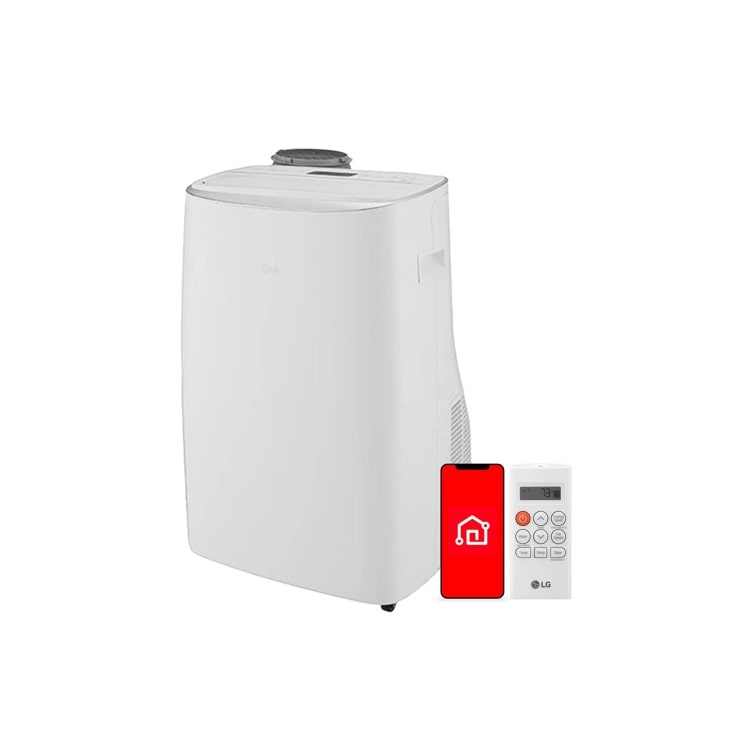
3. LG LP1419IVSM — quieter single-hose choice when noise matters most
The LG LP1419IVSM is not dual hose, so it is not the efficiency winner for the hottest rooms. Its advantage is comfort: LG lists it as a 10,000 BTU SACC / 14,000 BTU ASHRAE dual-inverter portable AC for rooms up to 500 square feet, with Wi-Fi control and a smoother compressor ramp than many cheaper models.
Cooling rating: 10,000 BTU SACC / 14,000 BTU ASHRAE
Room size: up to 500 sq. ft.
Best for: bedrooms where lower noise is more important than maximum efficiency
Watch for: single-hose limitations in very hot or leaky rooms
Typical price: usually around $600–$700
Choose this over the Whynter if your room is moderately warm and you mostly care about sleep-friendly operation. Choose the Midea Duo instead if you need stronger cooling while keeping the room sealed.
What to look for before buying
Use SACC/DOE BTU, not only ASHRAE BTU. ASHRAE numbers are tested differently and often make portable units look stronger than they feel in a real room. SACC or DOE ratings are more useful for comparing actual cooling.
Prefer dual hose for hot rooms. Single-hose models exhaust indoor air, which can pull hot outdoor air in through cracks. Dual hose designs reduce that problem and usually cool faster in difficult spaces.
Seal the window kit. A great AC with a leaky panel will disappoint. Foam tape, weatherstripping, and a clean hose route can matter almost as much as the unit itself.
Expect some maintenance. In humid climates, portable ACs may need draining. Keep the filter clean, check the drain instructions, and avoid shoving the hose into tight bends that trap heat.
Our verdict
For most people shopping for a portable air conditioner in 2026, the Midea Duo MAP14HS1TBL is the most balanced pick because it combines strong DOE-rated cooling, a dual-hose-style design, and lower noise. The Whynter ARC-14S is the value dual-hose alternative, while the LG LP1419IVSM makes sense when quiet operation matters more than maximum efficiency.